
At a Glance
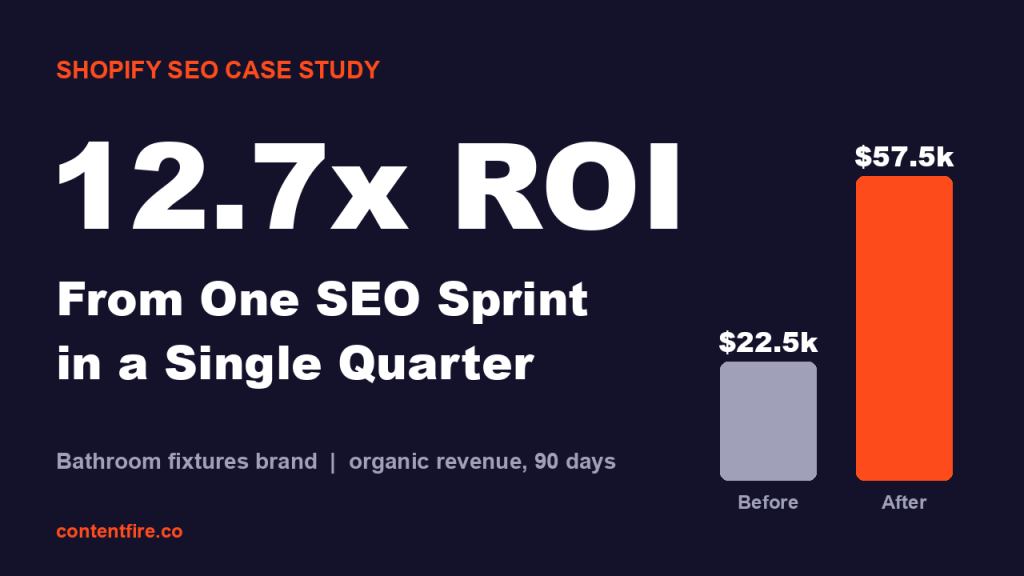
- 12.7x return on a one-time SEO sprint, in a single quarter
- +156% organic search revenue: $57.5k in the latest 90 days vs $22.5k in the 90 days before
- 3.5x their pre-project run-rate: $6.4k a month from organic search before, $22.6k in the latest 30 days
- 34 new collection pages, built from products they already sold, now earning about 200k Google impressions a month
The Client
The client sells bathroom and kitchen fixtures: vessel sinks, kitchen sinks, faucets, shower doors and more.
They’re an established brand that moved its long-running online store from Magento to Shopify in November 2025, bringing over a large catalog and more than 100 collections.
In February 2026 they brought us in for a focused sprint on URL structure, category mapping and keyword research, working alongside their in-house developer and marketing team.
What We Found
Titles Nobody Searches For
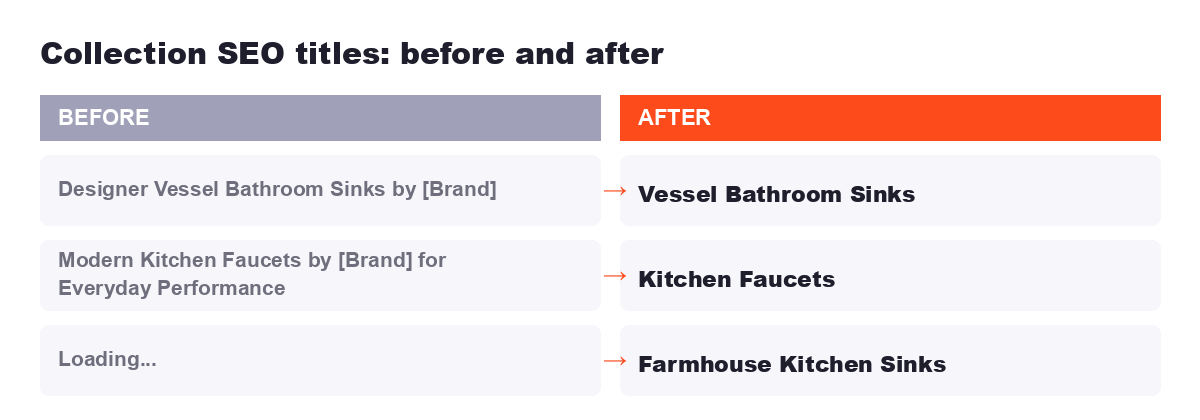
Collection SEO titles were long, template-built phrases. A third of them ran over 70 characters, and three rendered as “Loading…” in search results.
Their branded collections had little more than the collection name.
Thin Pages
60 of 104 collections had no meta description, and most had no descriptive copy at all.
Missing Pages for Real Searches
People don’t only search “vessel sink.” They search “black vessel sink,” “round vessel sink” and “small bathroom sink,” and their competitors had pages for those searches.
The client’s store had the products but no matching longtail pages.
Collections Showing the Wrong Products
One color collection showed every color variant of each product, so a shopper looking at blue vessel sinks saw every other color too.
Products Competing With Collections
Product SEO titles opened with broad category keywords, so product pages competed with their own collections for the same searches.
Technical Issues
Heading structure errors across collection and product templates, nested product URLs, outdated sitemaps, and crawl budget spent on review-widget parameter URLs.
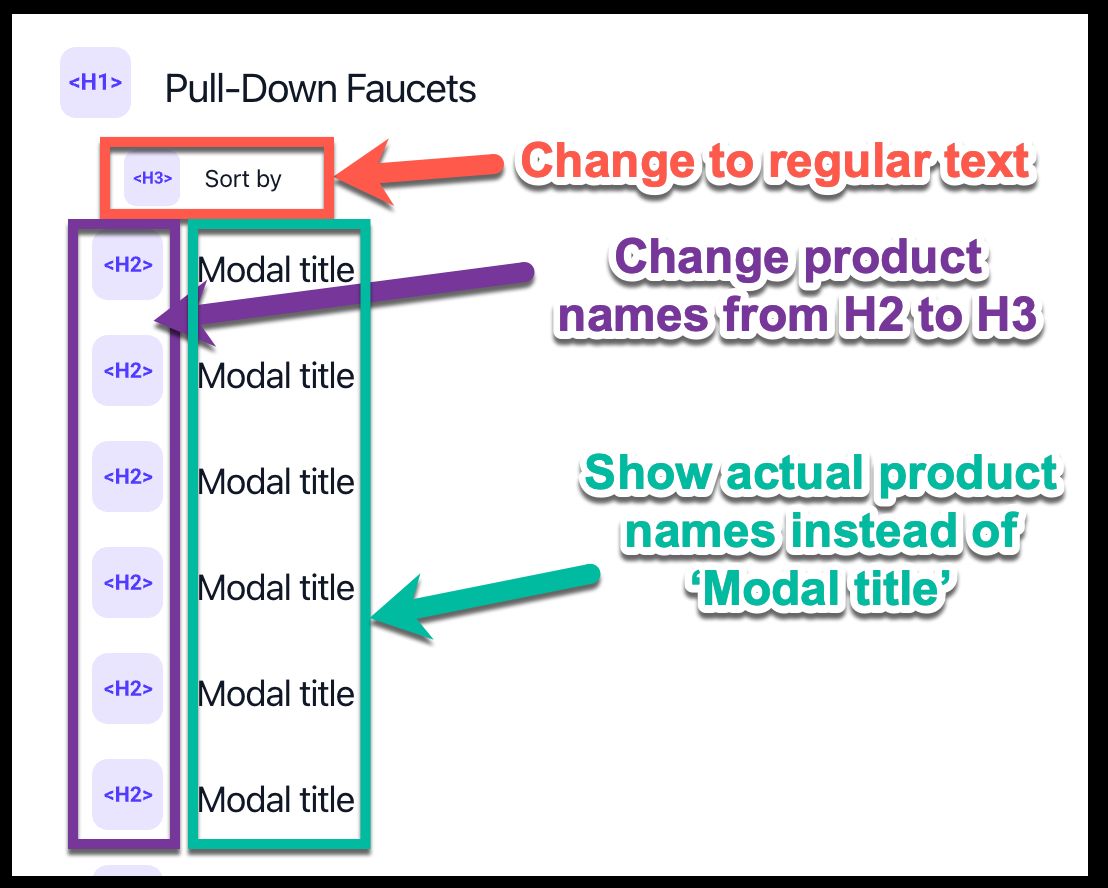
Do your collection pages look like this? Book a free call and I’ll show you which pages I’d fix first.
What We Did (February to March 2026)
Technical Fixes First
We wrote the specs, and their developer implemented all of them within a few days.
Rewrote All 103 Existing Collections
A completely new SEO title, meta description, intro copy, supporting copy below the products, and five internal links to related collections.
For example, a long template title like “Designer Vessel Bathroom Sinks by [Brand]” became simply “Vessel Bathroom Sinks,” the phrase shoppers actually type.
Built 34 New Collections
We built them around searches the store could already serve: “kitchen sink with faucet” (40,500 searches a month), “stainless steel kitchen sink” (33,100), “single handle kitchen faucet” (8,100), “small bathroom sink” (6,600), “brushed nickel bathroom faucet” (5,400), “single bowl kitchen sink” (5,400) and “deep kitchen sink” (3,600).
We also built color and shape vessel sink pages: black, white, blue, round, oval, square and rectangular.
Checked Every New Page With Their Team
They know their catalog best, so their staff confirmed, by Loom, a shared tracking sheet and a call, that each new collection held every product that belonged on it.
Showed Only the Matching Variant
We designed a simple rule so a color or finish collection would show only that color, which wasn’t working correctly with their initial setup. Their developer built it, and we applied it to 12 collections, including vessel sink shapes and faucet finishes.
Gave Products and Collections Separate Jobs
Collections target the broad term (“frameless sliding shower doors”). Products target the model name plus that term.
Their marketing team applied this rule to about 110 products, with a 301 redirect for every URL that changed.
The Results
For a few months, not much happened. From April to June, the brand made about $6k to $9k a month from organic search.
If they had judged the work in June, they would have called it a waste.
Then July came: $19.9k from organic search, up 131% from June. September was their best month yet at $23.4k.
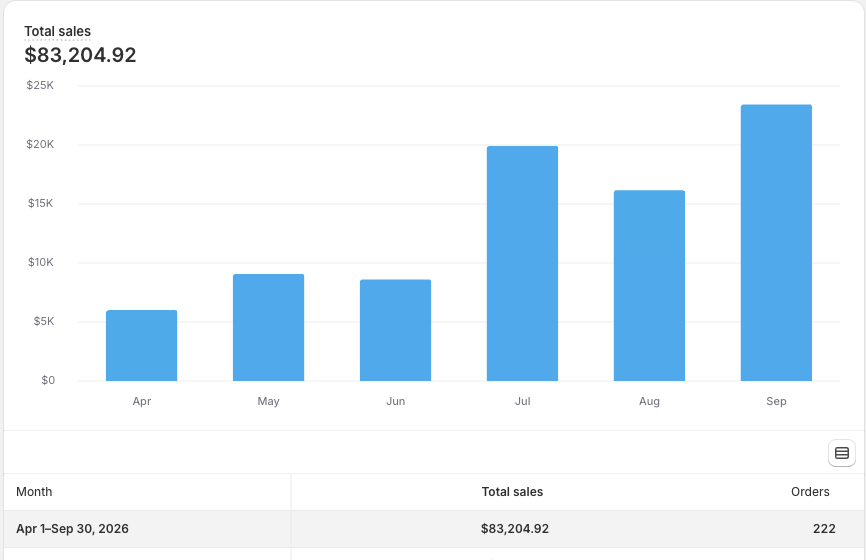
In the latest 90 days, the brand made $57.5k from organic search, up 156% from $22.5k in the 90 days before.
Their store as a whole grew 47% over the same stretch, so they grew organic revenue more than 3x as fast as the business. That’s a 12.7x return on the project in one quarter, with no retainer.
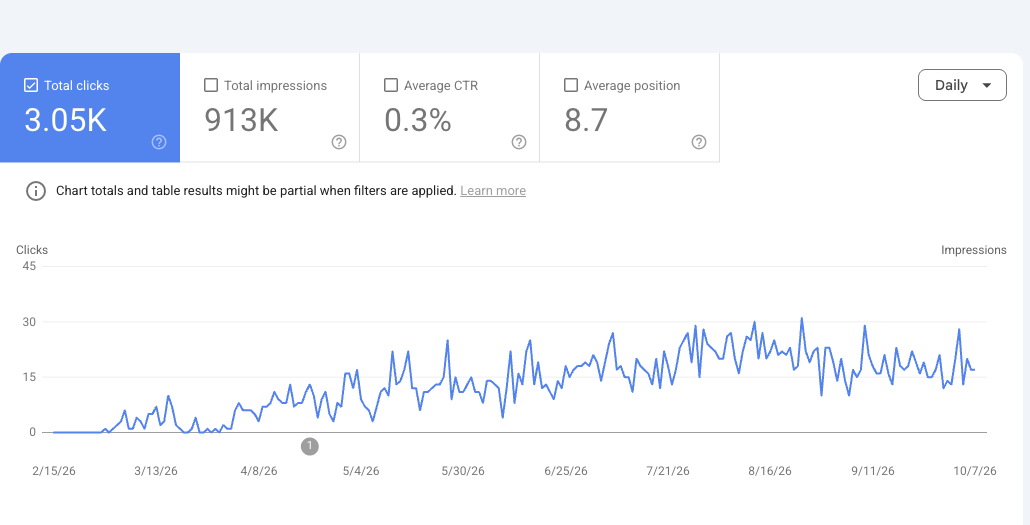
The 34 new collections went from zero to about 200k Google impressions and 500 to 700 clicks a month, at an average position around 8.
Want results like these for your store? Book a call and I’ll show you what I’d do first.
A Bonus: Shoppers From AI Search
We didn’t do any separate AI optimization. SEO was our only focus. But the same collection pages that started ranking in Google also started showing up in AI answers.
Last quarter, shoppers referred by AI assistants like ChatGPT placed $9.4k in tracked orders, 15x the quarter before, and AI-referred visits more than doubled.
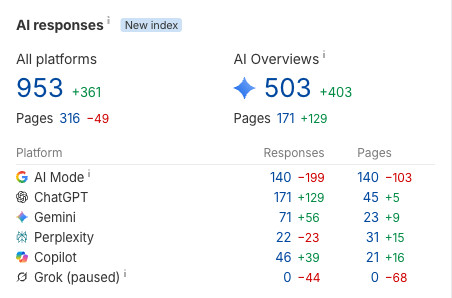
Their visibility inside AI answers grew too. Since the project wrapped up in the spring, Ahrefs shows their Google AI Overview mentions up 5x (from about 100 to 503) and ChatGPT mentions up 4x (from 42 to 171).
The Takeaway
You may not need new products, new content, or a bigger ad budget. Often the fastest SEO win is grouping what’s already on the shelf the way shoppers search for it, and making sure each page has one clear job.
If you have an established Shopify store not doing as well as you think you should from organic traffic, book a call and I’ll tell you which pages I’d build first.
